
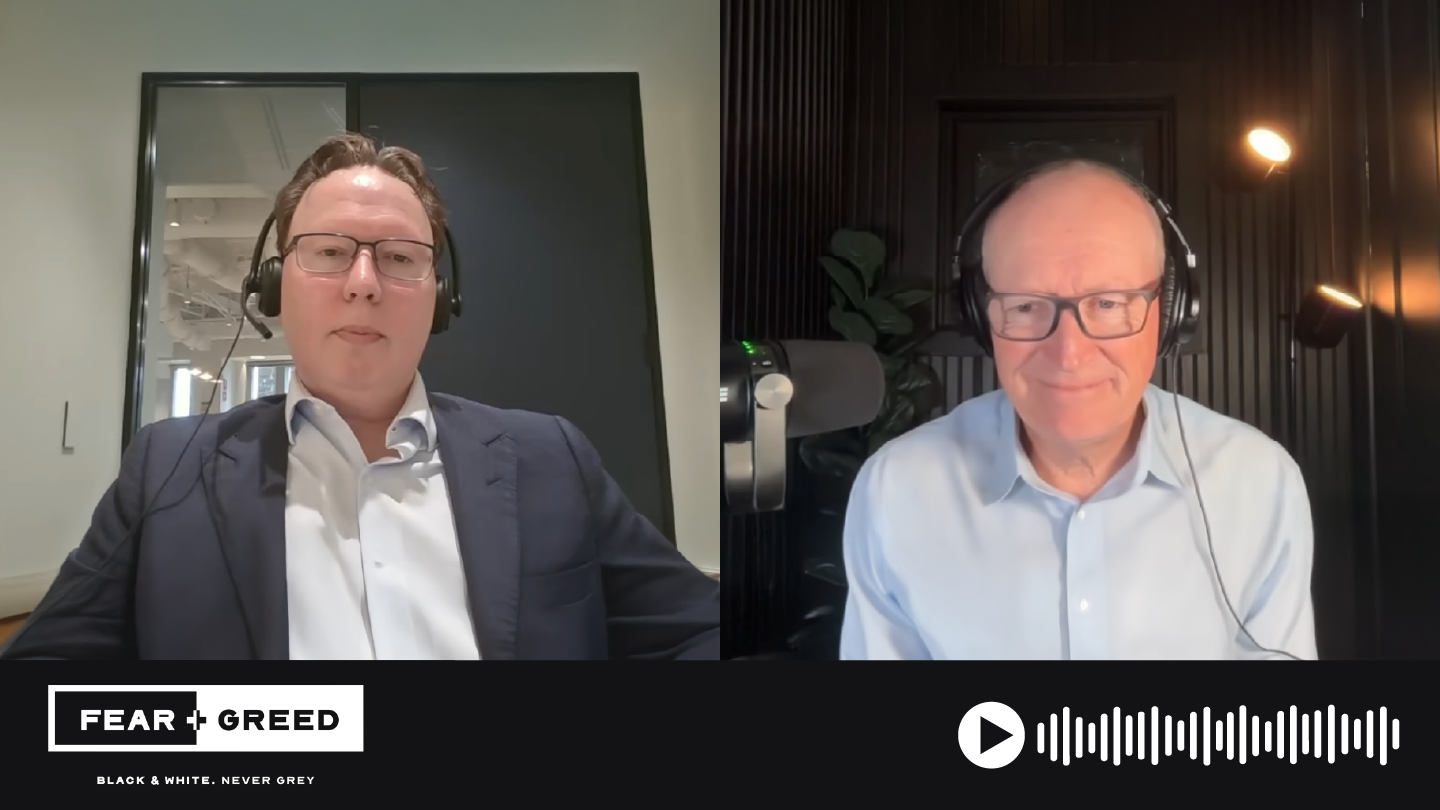


近日,RAM执行董事暨固定收益主管Michael Frearson受邀出席澳洲财经节目《Fear & Greed》,与主持人就固定收益及私募信贷投资中的底层资产风险展开讨论。
私募信贷细分领域差异
Michael指出,私募信贷市场涵盖众多细分领域,各策略在收益率、风险水平及流动性方面存在显著差异。
相对低风险的策略主要包括有优先级抵押贷款,结构清晰、安全性较高。而较高风险领域则涉及企业贷款、房地产开发贷款及离岸私人债务等,潜在收益虽高,但波动性和违约风险相应上升。
他强调,投资者不能仅关注表层收益率,而应穿透产品结构,明确资金底层的抵押品质量。
澳洲信贷市场韧性
澳洲信贷市场在过去数十年间经历了两轮重大压力测试:1990年代初期经济衰退及2008年全球金融危机。
Michael回顾数据后发现,尽管期间贷款逾期率有所上升,但主要银行抵押贷款组合及投资级证券化信贷产品的实际风险始终保持在极低水平。
他指出,即使在极端压力环境下,作为全国最大资产类别及银行资产核心的住房抵押贷款市场,依然展现出极高的资产质量和稳定性。这一结论表明,信贷资产的安全性关键在于底层抵押资产的选择。
RAM策略框架
RAM的策略路径始终保持清晰且一致:聚焦澳洲第一注册住宅抵押贷款,严格控制贷款价值比(LVR),坚持高度多元化的资产配置。
在当前利率维持高位、宏观前景仍存在不确定性的背景下,Michael也向投资者分享了几点值得关注的核心思路:
第一,关注底层资产,而非仅看表面收益。投资者要深入理解资金最终投向何种资产、对应何种抵押品,以及其在资本结构中的优先级。
第二,优先考虑本土市场、有担保且结构清晰的信贷策略。尤其对于以稳定现金流为目标的配置型资金而言,上述资产结构通常更有助于提升组合稳定性。
第三,重视浮动利率带来的防御属性。在利率高位运行的环境下,浮动利率收入结构有助于缓解通胀对实际收益的影响,并提升投资组合对利率周期的适应能力。
点击此处收听完整采访:
Sean Aylmer:
Welcome to Fear & Greed Q&A, where we ask and answer questions about business investing, economics, politics and more. I’m Sean Aylmer. Over the past few years, Australian investors have poured billions of dollars into things like private credit and income strategies. But as rates have risen and global credit markets have come under pressure, some investors are perhaps panic selling, suggesting they may not quite know the true value of the underlying asset of the investments they hold. My guest today is Michael Frearson, Head of Fixed Income at Real Asset Management, RAM. RAM works with Blue Chip Communications, which is a great supporter of this podcast. Michael has spent more than two decades in fixed income and says the key to investing now is to know what assets underpin what you’re holding. Remember, this is general information only and you should always seek advice tailored to your circumstances before making investment decisions. Michael, welcome to Fear & Greed Q&A.
Michael Frearson:
Well, thank you, Sean. It’s great to be here with you to discuss this.
Sean Aylmer:
So, for many of us investing in fixed income, that term fixed income, it’s kind of this black box. But I think what we need from you, what I’m wondering from you, is really a 101 on the importance of understanding what you’re actually investing in, what the underlying asset is.
Michael Frearson:
Yeah, thanks, Sean. It’s a very broad question because it is a very broad asset class. I’ll try to demystify it for you. Effectively, when you’re investing in fixed income, you’re lending money to someone. If it’s a bond, it’s just literally you’re lending money to that company. If it’s a loan, you’re lending money to an individual or a company and they promise to pay you back in accordance with the terms of that loan. So, at its simplest, it’s the investors giving their capital to someone with the hope that they get it paid back and get paid the promised income stream. So, within fixed income, there’s a very broad range of different types of fixed income. There’s obviously fixed rate fixed income, which promises to pay you a fixed rate of return, or there’s floating rate fixed income, which goes up and down with movements in the cash rate. But the two key risks investors face in all fixed income is either interest rate risk or credit risk. The other key difference is there’s public market credit exposure, which are things like bonds, which trade in the over-the-counter market or on the Australian Stock Exchange, or there is private market fixed income, which is a growing asset class.
Sean Aylmer:
That’s actually a very clear explanation of what’s going on here. So that’s good. Well, let’s talk about private credit and income funds over the past few years. We’ve heard a lot about them. What are people buying? What have people been buying? And where are they finding themselves at the moment?
Michael Frearson:
So, private credit is, again, a very broad asset class with a range of different sub-sectors within private credit. So, in Australia, investors have been attracted to both the high returns available from private credit, as well as the capital stability, given the floating rate assets. So that means they don’t go up and down when interest rates go up. Given the property obsessed culture we are part of, the majority of private credit domestically is backed by property. And then it can be a wide range of different types of property. So, it can be commercial property, it could be residential mortgages. The other key area of domestic private credit is corporate private credit, where large non-banks lend to both small and large corporates in either a secured or unsecured loan. But then that’s a different risk profile given it has the business risk. It’s not just secured by private assets.
Sean Aylmer:
Okay, so let’s take the next step then. So, I’m with you so far. That all sounds quite sensible and you get your return. Fantastic in good times, I’m sure, and particularly in low interest rate environments. But of course, what we’re seeing now are rising interest rate environments, fears of a slowdown in economic growth. How does that affect the different sides of the market, particularly the private market I’m talking about here. And how should investors think about that when they’re kind of, we’re all for long-term investing at Fear & Greed and what we don’t want to be, if things don’t look good right now, how should investors play their portfolio?
Michael Frearson:
Sure. I guess the other key sub-sector, which I didn’t mention, was offshore private credit. So that’s where you’re lending a lot of money to offshore groups, generally into corporate type loans and into venture capital type debt. So, like at the moment with the risk aversion increasing due to the oil price shock and the uncertainty, risk aversion has increased. So, at the moment, investors are a bit fearful, and they have been indiscriminately selling off some of their assets, particularly earlier in March, but the market has started to recover nicely over the last few weeks. So, some of that sentiment impacting the listed prices is more sentiment than any fundamental credit concerns with the outlook for the domestic market. But where we believe that investor concerns are warranted is for the groups that have offshore private credit exposure in their portfolios, given there are some more serious concerns about that offshore corporate private credit than the domestic private credit market.
Sean Aylmer:
Okay, so sort of reading between the lines there. In a sense, because our residential property market here is so strong and has been and will remain that way, but the offshore credit market is slightly more problematic. What should investors be focusing on then? Is it about diversification? Is it about trying to have a bias towards one, not the other? How should they think about it?
Michael Frearson:
Yeah, obviously it’s very important to have a well-diversified portfolio in any fixed income portfolio, given the key risk is that credit risk. So, I think rule number 1 is to really understand what is under the hood and what’s driving the returns on that particular investment. So, you need to know what risk factors you’re exposed to, be it either property development, be it offshore, or be it domestic simple securitised mortgages.
Sean Aylmer:
Okay, so you understand that, but in terms of your portfolio, do you need a bit of all or do you need a bias towards one, not the others?
Michael Frearson:
At RAM, we have an ASX-listed note called RAM Secured Income Notes. We also have the Real Income Fund. Both of these investments are backed by the same quality of assets. At RAM, we bias the portfolio to secured residential first mortgages that are domestic only. They are 100% Australian first registered mortgages with a low LVR. There’s a lot of security in the portfolio. We have a very diversified portfolio. Step number 1, we have security and that comes to the capital stability. The other thing we bias the portfolio is to deliver regular income for our investors. We have over 7,000 individual home loans, which provide that regular monthly income to investors. And it also means there’s negligible credit risk investors are exposed to. The key thing in the current environment, besides focusing on quality, is to bias the portfolio to floating rate. So floating rate income streams will benefit if the RBA raises the interest rates again next week, like the market currently expects them to.
Sean Aylmer:
Okay. If things get worse, unemployment rises, interest rates rise, we have falling house prices. How concerned are you about that?
Michael Frearson:
We’re not concerned about that at all in the current environment, given both the quality of our particular portfolio, our 90-day arrears in our portfolio are only 0.22% across the entire 7,000 loans. So that compares very favourably compared to the major banks, for example, which are 0.8 to 1% in the 90-day arrears. But additionally, if we look through history to understand how different investors behave during times of extreme market conditions, there’s been two key tests domestically which have impacted the Australian credit markets. So, during the global financial crisis, there was a lot of funding uncertainty. There was a big spike in home loan arrears, but that didn’t follow through to any losses across the major banks or in any of the investment grade securitised credit investments. But if we go back further to the 1992 recession, that provides some of the most meaningful data and comparisons we have. During the 1992 recession, there was a spike in unemployment. Interest rates were very high before they fell. But during that period, I think the loss rate on the ANZ portfolio was 11 basis points across their mortgage book. The loss rate on their commercial property book was 23.2%. Very big difference. And APRA has assumed hard lending risk for the industry of 18 basis points. So, it highlights that even under very severe stress, the mortgage market, which is the largest asset class in the country, backed in all of the banks’ balance sheets, it’s actually very high quality and very stable during times of extreme stress.
Sean Aylmer:
So, it means that the moral of the story, and we are not an investment podcast, always go to a financial advisor and get your own advice for your own circumstances, but investing in fixed income in residential property in Australia is a relatively safe bet. I say relatively because that we’re comparing to offshore and other places, but you know, 11 basis points in a recession, that ain’t bad.
Michael Frearson:
Yeah, thanks, Sean. But that’s also conditional on having a well-diversified portfolio and low LVR. So obviously there’s much greater risk if you lend at 100%.
Sean Aylmer:
Yeah, of course. Michael, thanks for talking to Fear & Greed.
Michael Frearson:
Great. Thank you, Sean.
Sean Aylmer:
That was Michael Frierson, Head of Fixed Income at Real Asset Management. Remember, this is general information only and you should seek advice tailored to your circumstances before making investment decisions. I’m Sean Aylmer and this is Fear & Greed Q&A.


